
Bloom Report September 2026
The garden reminds us that despite the mums and pumpkins that have suddenly appeared at nurseries want you to believe, summer is still here.
Snapdragons cut back mid-summer are putting up new blooms, like ‘Black Prince’ pictured. Often thought of as old-fashioned annuals, we’ve found snapdragons to be incredibly rewarding: beautiful, resilient, diverse. They have even overwintered here, challenging their status as mere annuals.
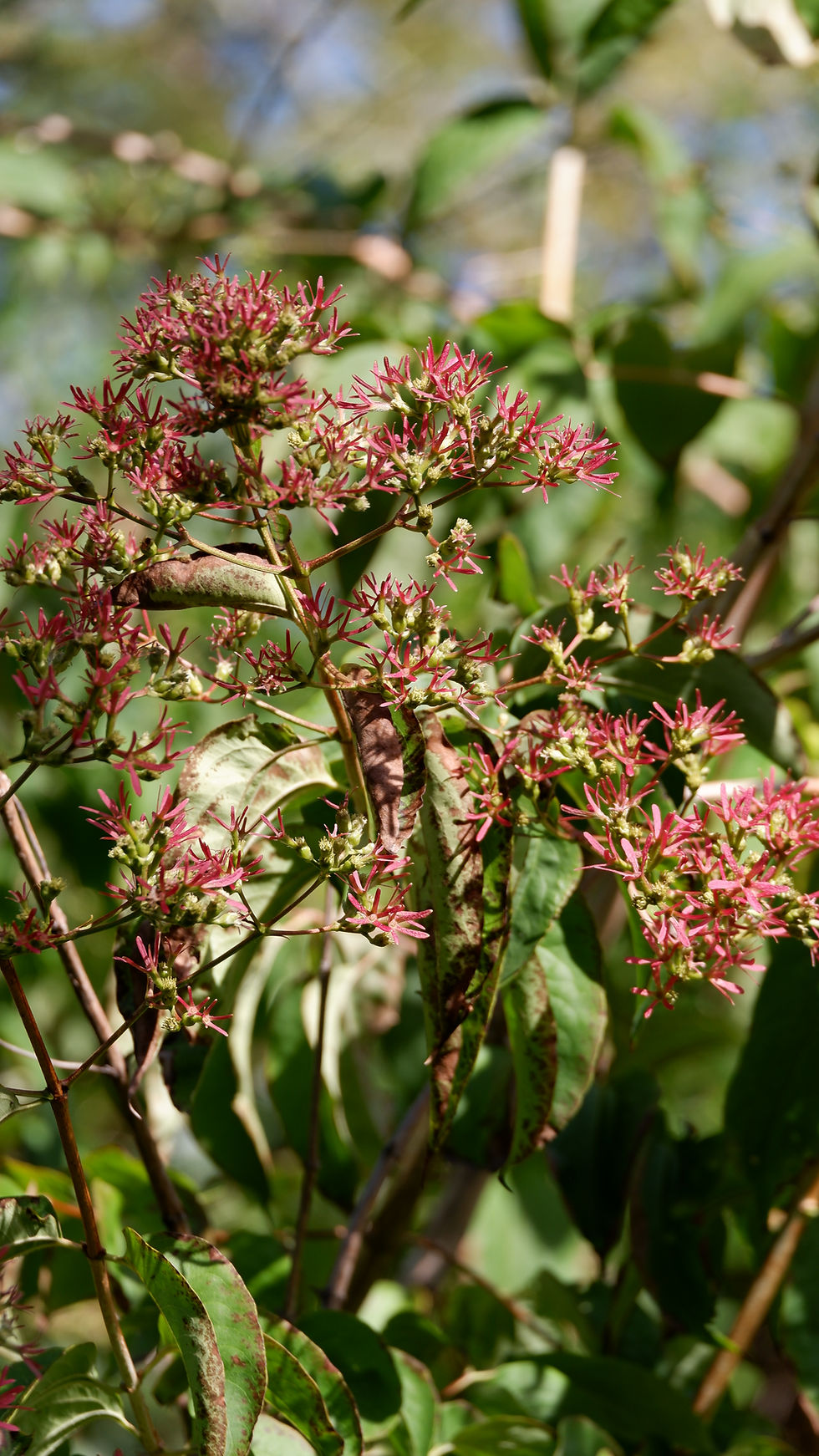
Heptacodium miconioides, the Seven-Son tree, is putting on its late season show, a treat for both human and pollinator. While not related to Hydrangea, they remind me of them for their similar flowering time and interest beyond peak flower. Just as the bracts on Hydrangea paniculata (‘Jane’, sometimes called “Little Lime”) persist and turn a deep red-pink, so to do the calyces of flowers of the Seven-Son tree, extending “bloom” time.
The cottage is exploding with color and texture. Large swathes of Rudbeckia triloba, the brown-eyed Susan herself, greet you as you enter. One could spend hours inspecting each bed of the cottage and the flowers within it. Standouts include the towering Hibiscus hybrid ‘Raspberry Rose’ (you can’t miss it!) aside a stand of the ‘Verrone’s Obsidian’ dahlia with its quilled, oxblood petals. In various beds within the cottage, you’ll find Anemone ‘Blessingham Glow’. With its double petals and bubblegum pink petals, I find it to be very cute and charming.
If something more obscure is more your speed, take a stop right beside the steps by the Propagation House for Eryngium ravenellii, swamp rattlesnake master. This interesting perennial was started from seed at Willowwood, and so far, has been fantastic! Another obscure, but rewarding perennial can be found in the Rosarie: Sanguisorba tenuifolia ‘Purpurea’, its drifts of wine-colored flower heads providing unique interest.
Right now, a walk through our meadows is a treat for the soul. Amongst the golden grasses and asters coming into flower, goldfinch feast on seeds while butterflies stop for nectar, such as this monarch on the towering cup plant, Silphium perfoliatum. If a cooler, shadier spot is desired – or even to take cover from rain – I always recommend the porch at Pan’s Garden, where we frequently display “floating arrangements”.
By Bonnie Semmling


Comments